
Jib Cranes
Jib cranes are indispensable lifting solutions in numerous industrial and commercial settings. They’re designed for localized material handling, providing efficient and precise movement of loads within a defined circular or semi-circular area. If you’re considering a jib crane for sale, understanding the various types, critical factors, and associated costs is crucial for making an informed decision.
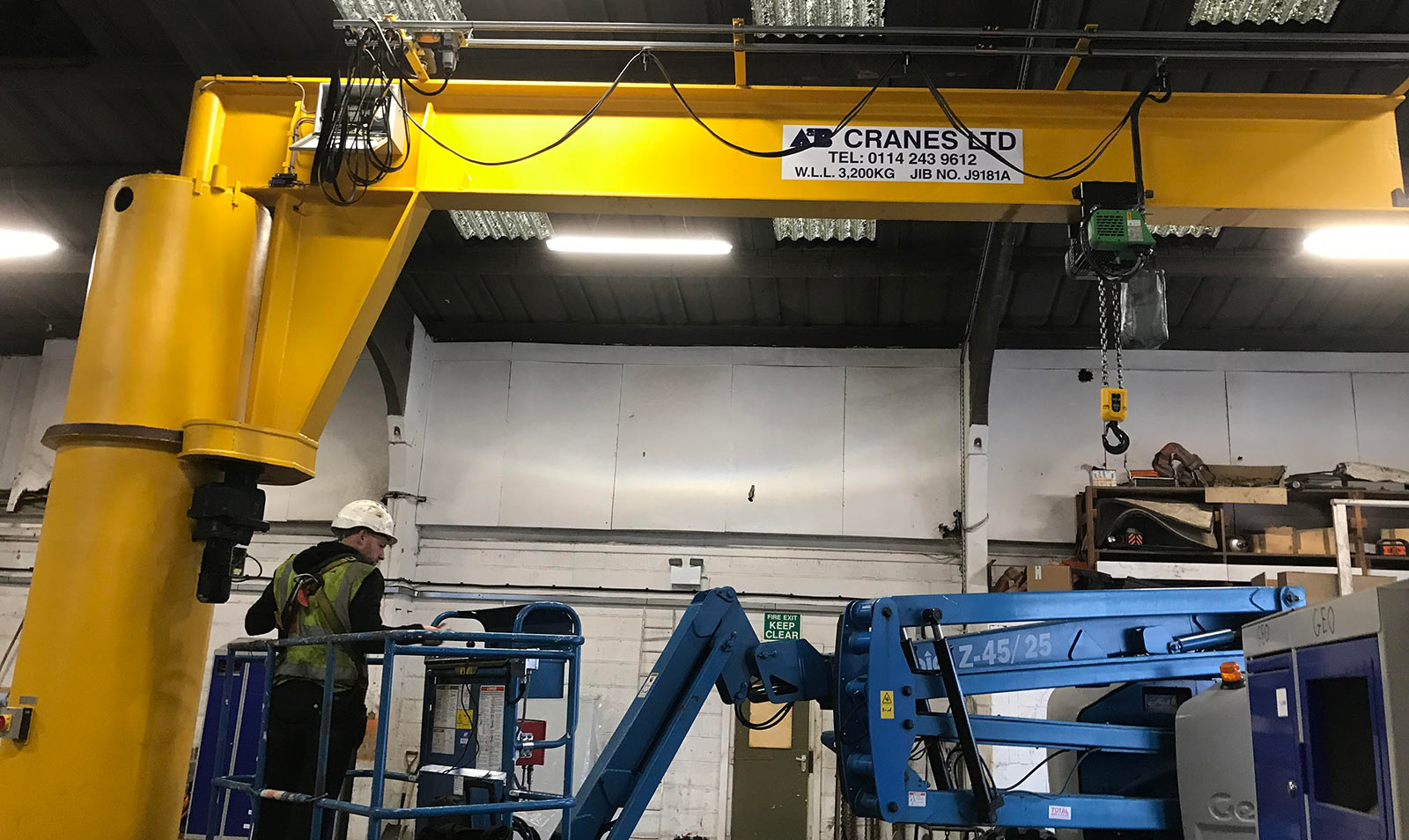
The Typical Jib
A jib crane typically consists of a horizontal member (the boom or jib) that supports a movable hoist and is fixed to a wall or mounted on a floor-standing pillar. This design allows for rotation of the boom, providing a wide range of motion for lifting, lowering, and traversing loads. Their compact footprint and versatility make them ideal for workstations, assembly lines, loading docks, and various manufacturing processes.
Safety and Maintenance
Safety is paramount when operating any lifting equipment. Jib cranes must comply with regulations such as LOLER (Lifting Operations and Lifting Equipment Regulations) and PUWER (Provision and Use of Work Equipment Regulations).
Safety Standards
- LOLER: Requires all lifting equipment to be planned by a “competent person” and undergo regular thorough examinations (every 6 months for lifting people/accessories, every 12 months for other lifting equipment). Records of these examinations must be kept.
- PUWER: Mandates that all work equipment is suitable, safe, properly maintained, and only used by trained personnel.
Types of Jib Cranes for Sale
The market offers a diverse range of jib cranes, each suited for specific applications and spatial constraints.
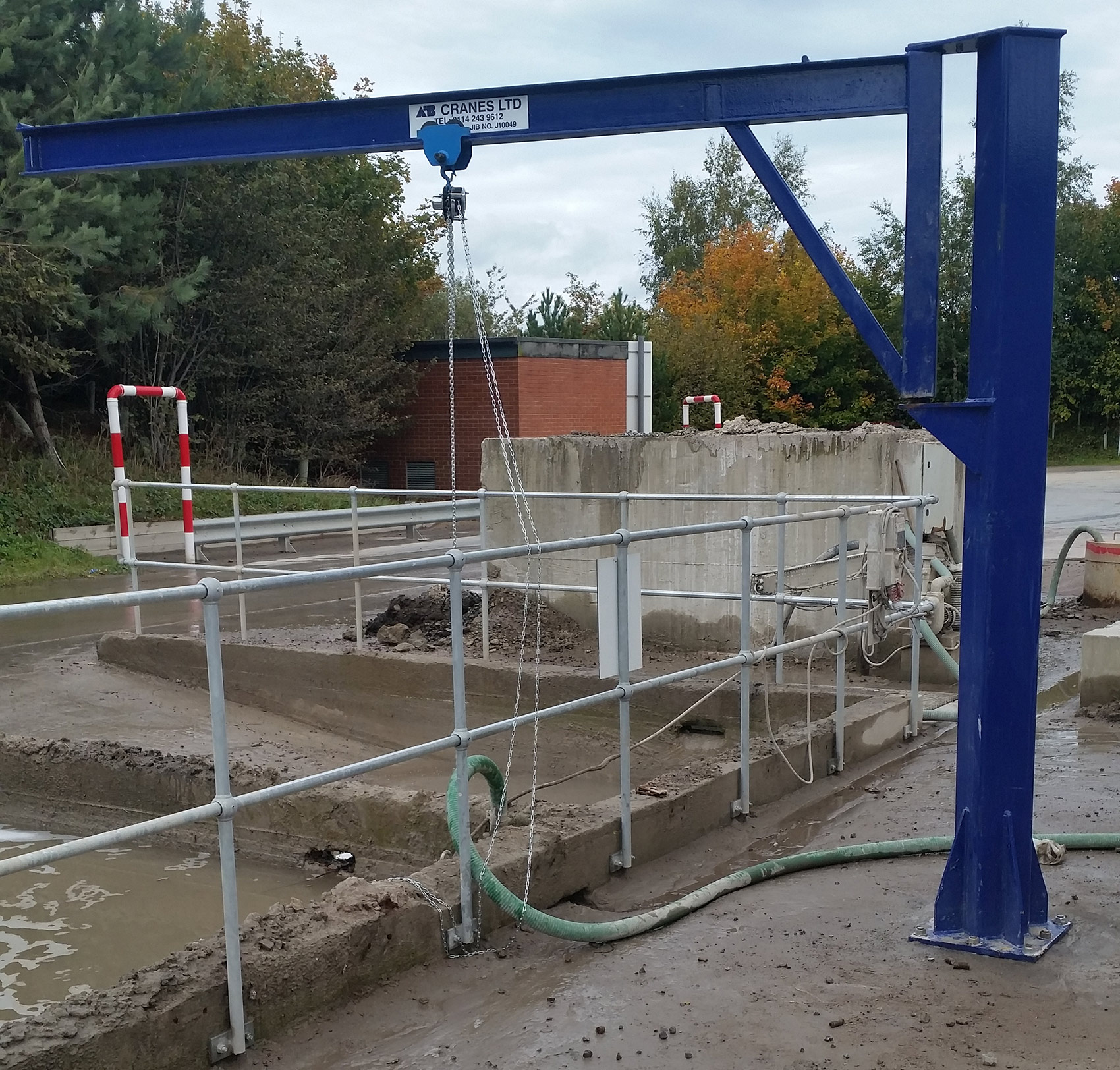
Freestanding Jib Cranes
These are self-supported cranes with a mast mounted on a concrete foundation. They offer 360-degree rotation and are highly versatile, suitable for both indoor and outdoor use. They can handle capacities ranging from light duty (e.g., 80 kg) to heavy duty (e.g., 5 tons or more) with spans reaching up to 20 feet. The foundation requirements can be substantial, often costing as much as the crane itself.
Wall-Mounted Jib Cranes
Attached to a building’s structural columns or walls, wall-mounted jib cranes save valuable floor space. They typically offer a 180- to 200-degree rotation and are ideal for individual workstations or areas where floor obstruction is a concern. Their capacity and reach depend on the structural integrity of the mounting surface.
Mast-Style Jib Cranes
Similar to freestanding jibs, mast-style cranes are also floor-supported but often require an overhead building support for stability. They can be full-cantilevered (boom at the top of the mast for maximum clearance) or drop-cantilevered (boom lowered on the mast to clear overhead obstructions). They offer high lifting capacities, making them suitable for heavy-duty applications.
Articulating Jib Cranes
Also known as knuckle jibs, these cranes feature multiple articulated arms, providing exceptional flexibility and reach in confined or hard-to-reach spaces. They can be floor-mounted, wall-mounted, ceiling-mounted, or even bridge-mounted, offering precise load positioning in multiple directions.
Workstation Jib Cranes
Designed for lighter loads and specific work areas, these cranes are typically smaller and offer ergonomic benefits, reducing operator fatigue and improving efficiency. They come in various mounting options, including freestanding and wall-mounted.
Key Factors When Buying a Jib Crane
Selecting the right jib crane involves a careful assessment of your operational needs and site conditions.
1. Capacity (Safe Working Load – SWL)
Determine the maximum weight you’ll need to lift, including the hoist and trolley. It’s crucial to factor in potential shock loading and a safety margin. Over-specifying adds unnecessary cost, while under-specifying risks equipment damage and safety hazards.
2. Height Under Boom (HUB)
This is the distance from the floor to the underside of the boom. Consider the height of your loads, the hoist body, and any required headroom clearance to ensure sufficient lifting distance.
3. Overall Height
Account for the crane’s full height, including any attachments like electrical entry, to ensure full rotational potential without overhead obstructions.
4. Working Span/Boom Length
This refers to the distance the hoist trolley can travel along the jib arm. Longer reaches offer more flexibility but can reduce the SWL at the boom’s extremity and place more strain on the structure.
5. Boom Rotation
Consider the required slewing angle (e.g., 180, 270, or 360 degrees) based on your workspace and areas the crane needs to access. Rotation stops can be fitted to limit the angle and prevent collisions.
6. Power Requirements
Determine if power is needed for rotation, trolley movement, or the hoist. Jib cranes can be manual or electric, with standard powered rotation around 0.5 RPM. Consider the power source (electric or air) and entry point (bottom or top).
7. Installation and Foundation
Freestanding jibs require robust reinforced concrete foundations, which can be a significant cost. Wall-mounted cranes depend on the strength of your existing structure. Proper installation by trained professionals is paramount for safety and performance.
8. Environment and Weatherization
If the crane will be used outdoors, ensure it and its electrical components are weatherized to protect against the elements and ensure longevity. Special finishes like hot-dip galvanizing or stainless steel are available for harsh environments (e.g., food industry, extreme weather).
9. Accessories and Options
Consider additional features like motorized rotation, box track festooning, boom locks, and custom features to suit specific applications
If considering a used crane, a thorough inspection by a qualified professional is essential to assess its condition, identify potential issues, and ensure it’s fit for purpose and compliant with regulations.
Regular maintenance is crucial for extending the lifespan of your jib crane and ensuring safe operation.
- Daily Visual Inspections: Check hoist cable/chain for wear, boom/mast for cracks/rust, brake functionality, and legible load capacity labels.
- Lubrication: Follow a schedule for pivot bearings, trolley wheels, wire rope guides, and articulating arm joints.
- Electrical Component Checks: Examine power cords, test emergency stops and limit switches.
- Structural Integrity: Inspect anchor bolts, baseplate torque, boom-to-mast welds, and mast plumbness.
- Environmental Considerations: Clean frequently in dusty/outdoor environments, use anti-corrosion sprays, and consider moisture-resistant grease or heaters in cold/humid climates.