
Scheduled Crane Maintenance
We tailor a service Scheduled Crane Maintenance package to suite customer’s individual needs, dependant of usage type, working environment and frequency of use. From this the inspection interval is determined. Our service programme aims to enhance product life, cut production loss and eliminate health and safety issues.
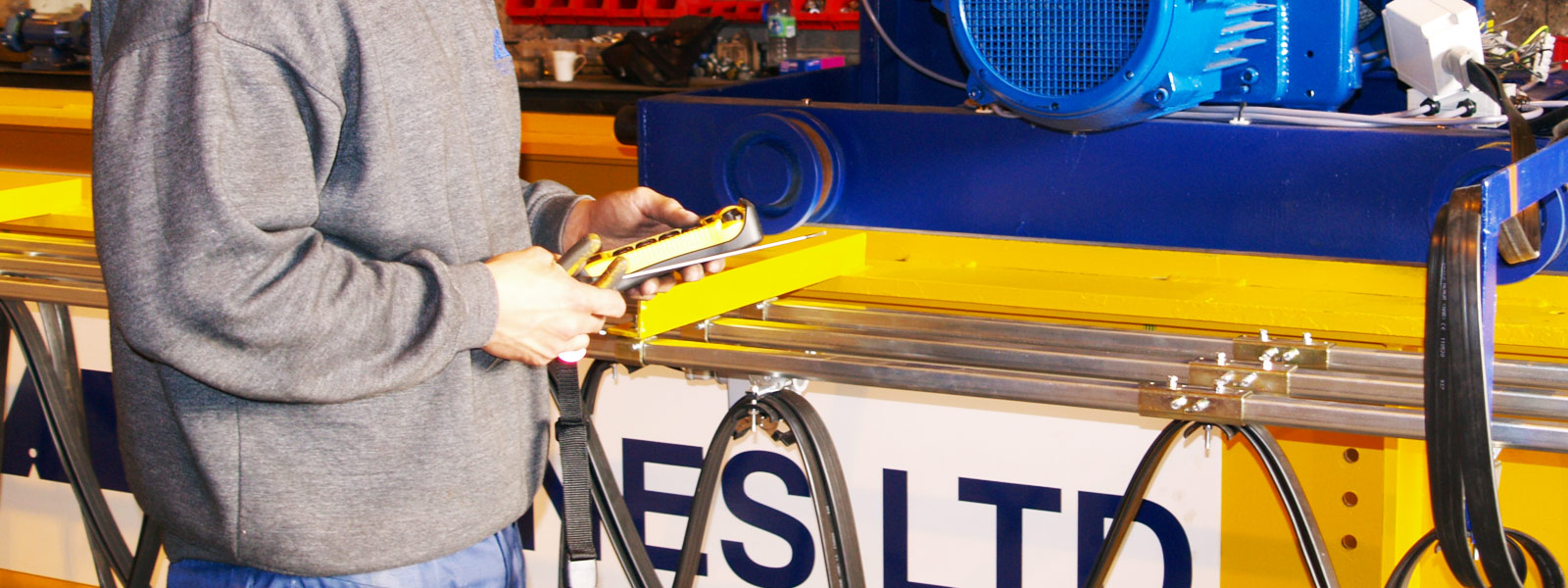
Crane inspections
A&B maintenance packages are designed to help your business comply with PUWER (Provision and Use of Work Equipment Regulations 1998) and LOLER (Lifting Operations and Lifting Equipment Regulations 1998) guidelines.
Part of these recommendations outline that all lifting equipment should be checked as regularly as necessary to ensure its safe for use. This includes crane inspections that often need to be carried out quarterly, monthly or even in some cases weekly.
The frequency of these crane inspections varies depending on a factors like the type of crane in question, its age, how often it’s used and any instances of damage previously reported. If you’re unsure how often your equipment should be inspected, we are more than happy to advise on this.
A&B preventive maintenance and service contracts are tailored to suit your lifting equipment and your workplace and therefore include a bespoke crane inspection schedule. In addition we can help by providing Thorough Examinations (more detailed and systematic checks required once or twice a year) carried out by one of our expert engineers within an appropriate timeframe.
Benefits of scheduled crane maintenance
The right crane preventive crane maintenance contract & crane inspection schedule provides the following benefits:
- Pre-empt the effects that everyday wear and tear can have on even the most robust lifting system over a sustained period.
- Delay or entirely prevent damage to stock and premises.
- Protect staff from hazards, potential serious injury or even fatalities.
- Minimise or eliminate downtime to due to breakdown.
- Increase operational efficiency of your cranes and lifting systems.
- Extend the overall working lifespan of your crane
Why is Scheduled Maintenance so Important for Cranes?
Scheduled crane maintenance is crucial for safety, compliance, and cost-effectiveness.
- Enhanced Safety: Regular inspections and maintenance identify wear, stress cracks, and component failures before they cause catastrophic accidents, protecting workers and property.
- Regulatory Compliance: Many jurisdictions (like LOLER in the UK) legally require thorough, periodic examinations by a competent person. Scheduled maintenance ensures the crane remains compliant, avoiding fines and legal issues.
- Reduced Downtime & Costs: A proactive maintenance plan helps catch minor issues early, preventing unexpected breakdowns that lead to costly emergency repairs and significant project delays.
- Extended Equipment Lifespan: Proper lubrication and timely replacement of worn parts significantly prolong the crane’s operational life, maximising the return on your investment.
How Often Should a Crane be Serviced?
The frequency of crane servicing depends on a variety of factors, including the crane’s type, age, usage (duty cycle), and operating environment.
- Daily/Pre-Shift Checks: Operators should perform visual and operational checks before each shift (e.g., fluid levels, wire rope condition, control functionality).
- Routine Maintenance: More in-depth monthly or quarterly inspections are often conducted by trained personnel, focusing on lubrication, electrical systems, and brake adjustments.
- Thorough Examinations: Legal or manufacturer requirements typically mandate a comprehensive annual inspection (or every 6 months for equipment lifting people) by a certified professional.
It is always necessary to follow the manufacturer’s specific recommendations and local regulatory guidelines.
What Key Components are Checked During Scheduled Maintenance?
Scheduled crane maintenance involves a systematic inspection of all critical mechanical, structural, and electrical components.
Key components checked include:
- Lifting Gear: Inspection of wire ropes (for fraying, kinks, and lubrication), load chains, and the hook (for wear, cracks, and proper latch operation).
- Braking Systems: Checking brake pads, linings, and adjustments to ensure they can hold the maximum rated load and stop safely.
- Structural Integrity: Visual and often non-destructive testing (NDT) inspection of the boom, structural welds, and frame for corrosion, cracks, or deformation.
- Safety Devices: Verification and calibration of all limit switches, load moment indicators (LMI), and emergency stop buttons.
- Drive Systems: Checking motors, gearboxes, and wheel assemblies for unusual noises, vibration, leaks, and proper lubrication.
What Documentation is Required for Crane Maintenance?
Detailed record-keeping is a mandatory and essential part of a scheduled maintenance program. You must maintain:
- Maintenance Logbooks: A complete record of all maintenance actions, repairs, component replacements, and adjustments, including the date and the technician who performed the work.
- Inspection Checklists: Completed and signed checklists for all daily, monthly, and annual inspections.
- Thorough Examination Reports: Formal, written reports from the “competent person” who carried out the statutory examinations, detailing their findings and certifying the crane’s safety to operate.
- Load Test Records: Documentation showing the date and results of any required load-testing procedures.